Category: Blog

  • From Petticoats to Blue Jeans: The Evolution of Square Dance Attire

    From Petticoats to Blue Jeans: The Evolution of Square Dance Attire

    If you ask ten square dancers what people are “supposed” to wear to a dance, you’ll probably get ten different answers.

    And honestly, that makes perfect sense — because square dance attire has changed dramatically over the years.

    Like square dancing itself, the clothing has evolved with the times.

    The Early Days: Practical Clothing

    In the earliest days of American folk and community dancing, people usually danced in whatever they already owned. These weren’t performances or staged events — they were social gatherings.

    Farm communities, rural towns, and local celebrations didn’t exactly have official dress codes.

    Men often wore work clothes or simple Sunday attire. Women wore everyday dresses that allowed movement. The focus was less on fashion and more on community, music, and dancing until the floorboards shook.

    Comfort and practicality mattered most.

    The Rise of “Traditional” Square Dance Fashion

    By the 1940s, 50s, and especially the 60s, modern western square dancing exploded in popularity across the United States. During that boom, square dance fashion became much more formalized and recognizable.

    This is the era most people picture when they think of square dancing:

    • colorful petticoats,
    • full twirling skirts,
    • western shirts,
    • bolo ties,
    • matching outfits,
    • polished boots,
    • and enough fabric to make a spin visible from space.

    The dresses became part of the visual excitement of dancing. A well-timed twirl with a bright petticoat underneath became almost iconic.

    Many clubs embraced coordinated clothing as part of club identity and pride. Festivals and conventions often looked like moving rainbows of satin, lace, and western wear.

    And to be fair — it was fun.

    Still is, for many dancers.

    The Shift Toward Comfort and Accessibility

    As the decades passed, attitudes slowly began to change.

    Some dancers loved the traditional attire.
    Others found it expensive, uncomfortable, intimidating, or simply not their personal style.

    At the same time, clubs began recognizing something important:

    If the goal is keeping square dancing alive and welcoming, clothing should never become a barrier to participation.

    Modern square dancing already asks newcomers to learn timing, formations, and vocabulary. Requiring a specialized wardrobe on top of that can make the activity feel even less approachable.

    So over time, many clubs relaxed their expectations.

    Today, it’s increasingly common to see:

    • jeans,
    • t-shirts,
    • casual western wear,
    • skirts without petticoats,
    • sneakers,
    • polos,
    • or pretty much anything comfortable enough to dance in.

    And honestly? Most dancers care far more about whether you’re having fun than what shoes you showed up wearing.

    What Matters Most Today

    Modern square dance attire can best be summarized in one simple sentence:

    Wear what makes you comfortable and respectful of the people around you.

    That means:

    • clean clothes,
    • basic hygiene,
    • comfortable shoes,
    • and clothing you can move in safely.

    That’s really it.

    Some dancers still love dressing up in full traditional attire, and that tradition absolutely deserves appreciation and respect. Those dresses, shirts, and western styles are part of square dance history and culture.

    But today’s dance floor has room for everyone:

    • the dancer in full crinoline,
    • the dancer in blue jeans,
    • the dancer in sneakers,
    • and the dancer who came straight from work.

    Because at the end of the night, nobody remembers what brand of shirt you wore.

    They remember whether you smiled, laughed, recovered the square, and helped make the dance fun for everybody else.

  • Funny Things Every Square Dancer Has Said

    Funny Things Every Square Dancer Has Said

    Square dancers have their own language.

    Some of it makes perfect sense.
    Some of it sounds absolutely ridiculous outside the hall.

    And honestly? That’s part of the charm.

    One of the funniest moments is sitting around a restaurant table after a dance with callers and dancers, casually carrying on a completely normal conversation — at least normal to us. Meanwhile, the people at the next table are overhearing things like, “The Reverse Flutterwheel out of that Load The Boat was rough,” or “I thought we were in Lines, not Waves,” and you can almost see them trying to determine whether we’re discussing advanced mathematics, farm equipment, or some kind of secret society. Honestly, if you’re not a square dancer, phrases like Flutterwheel and Relay the Deucey sound completely made up. And to be fair… “Deucey” barely sounds like a real word even when you are a dancer.

    If you’ve danced long enough, you’ve probably heard — or personally said — at least a few of these:

    • “Wait… who’s my corner?”
    • “I knew where I was until you asked me.”
    • “Just smile confidently. Nobody will notice.”
    • “We are completely wrong.”
    • “Well… this is definitely a square.”
    • “I think we invented a new formation.”
    • “Somebody important looks concerned.”
    • “Do NOT follow me.”
    • “We’re close enough.”
    • “The caller sounds nervous.”
    • “I had it three calls ago.”
    • “How did we end up here?”
    • “I swear that made sense in my head.”
    • “Pretend this was intentional.”
    • “Home? Emotionally or geographically?”
    • “That was smooth right up until it absolutely wasn’t.”
    • “We lost one.”
    • “I can recover this. Probably.”
    • “Everybody act natural.”
    • “This square runs entirely on optimism.”
    • “TURN LEFT! NO! THE OTHER LEFT!”

    And then there are the phrases only square dancers say with complete seriousness:

    • “Can we get just one more couple?”
    • “It’s only Plus.”
    • “I dance better after snacks.”
    • “We need stronger angels in this square.”
    • “That hot hash was fast. (or slow…)”
    • “I love a caller who keeps you humble.”

    The truth is, square dancing creates some of the funniest moments because it lives somewhere between teamwork, chaos, timing, and blind optimism.

    Eight people trying to solve a moving puzzle in real time will always create comedy eventually.

    Especially when everyone is convinced somebody else knows what’s happening.

    But somehow, by the end of the tip, most squares recover, everybody laughs, and someone says:

    “Okay… NOW I remember how that works.”

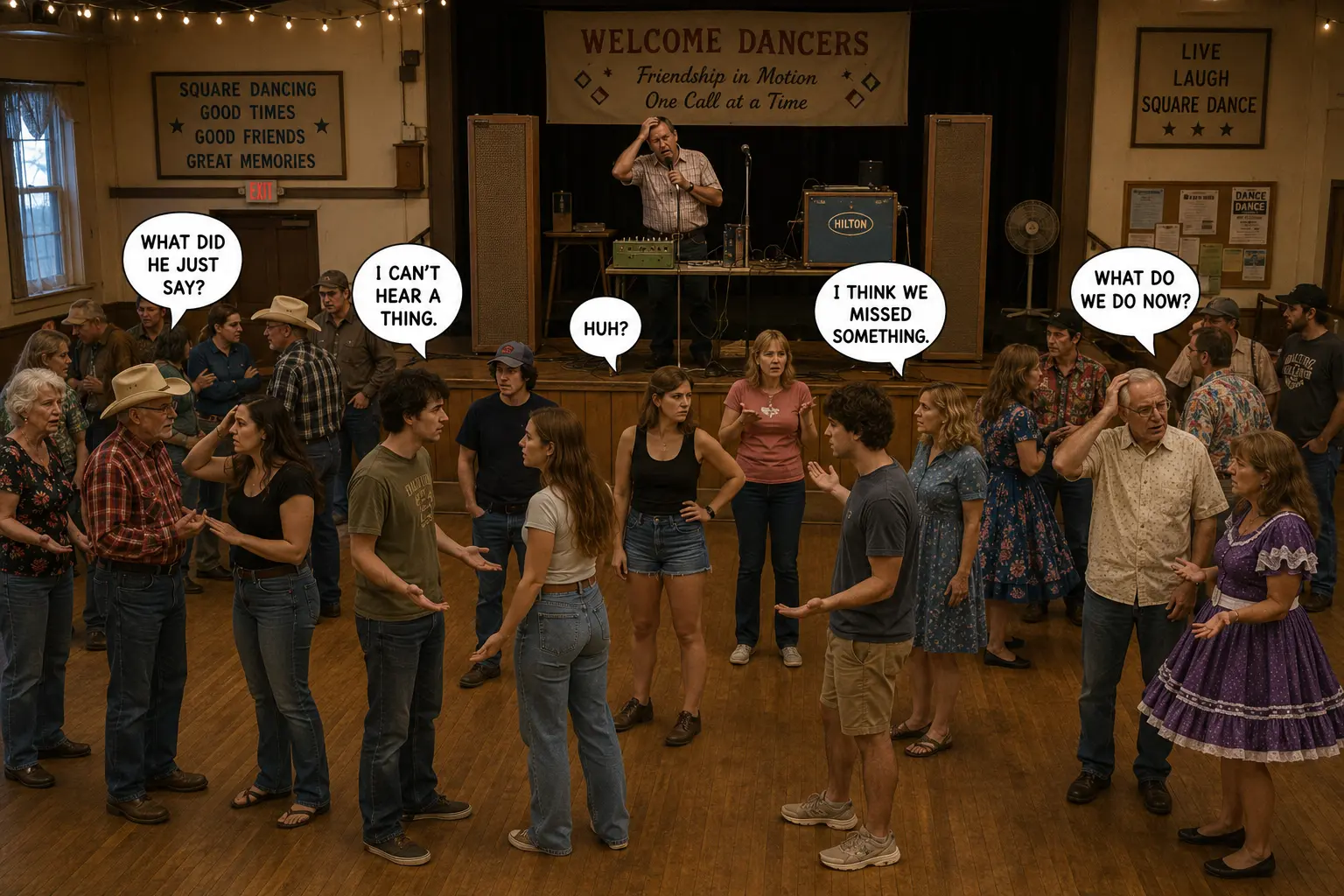
  • Everybody Panic! (And then form a line)

    Everybody Panic! (And then form a line)

    Every square dancer has been there.

    Everything is flowing perfectly… timing is good, the music is clicking, everybody’s smiling — and then suddenly:

    Somebody turns the wrong way.
    A couple ends up where they absolutely should not be.
    Half the square is confident.
    The other half is improvising with alarming enthusiasm.

    And somehow…

    …it recovers.

    Honestly, some of the most memorable moments in square dancing are not the perfect tips. They’re the recoveries.

    The moments when eight people stop panicking, start listening, and work together to get the square moving again before the caller completely gives up on us.

    There’s a certain magic to a good floor recovery. Experienced dancers know it instantly:

    • the subtle hand signals,
    • the quick line forming
    • the couples quietly slipping back into place,
    • the collective determination to make it work.

    And sometimes the recovery gets a bigger applause than the tip itself.

    What makes square dancing special is that recovery is built into the culture. Nobody dances perfectly all night long. Even strong dancers get lost. Even experienced squares have brain fog moments. The difference is learning not to freeze when things go sideways.

    Some of the best dancers on the floor are not the ones who never break down —
    they’re the ones who recover smoothly, keep smiling, and help everyone else relax.

    Because in the end, floor recovery is really about trust.

    Trust that somebody nearby can help.
    Trust that forming a line works.
    Trust that the caller will bring you home eventually.
    Trust that laughing is better than panicking.

    And maybe that’s part of why dancers keep coming back week after week.

    Not because every tip is flawless —
    but because there’s something deeply satisfying about eight people figuring it out together in real time.

    Even if it gets a little chaotic first.

  • International Dance Day: For the Coordinated, the Confident… and the Completely Clueless

    Today is International Dance Day – a day to celebrate every kind of movement, from world-class performances to whatever it is we all do when our favorite song comes on in the car.

    Dance comes in all forms. There’s ballet (graceful), hip-hop (cool), ballroom (fancy), and then there’s… whatever happens at weddings after 9pm (unhinged, but memorable). Some people train for years to perfect their craft. Others rely heavily on vibes and a strong belief that no one is watching.

    And honestly? Both count.

    That’s the beauty of dance – it doesn’t require perfection. It just requires participation. Whether you’re hitting every beat or just trying to survive it, you’re doing it right.

    Somewhere in the middle of all that is square dancing – the perfect mix of “I’ve got this” and “wait… where am I going?” It’s structured enough to feel like you know what’s happening, but just unpredictable enough to keep you humble. One minute you’re confidently following the caller, and the next you’re making eye contact with your square like, we’re all lost, right?

    But then something magical happens – you figure it out. The square lines back up, everyone’s moving together, and for a brief, shining moment, you feel like a dance genius. (Enjoy it. It may not last.)

    Square dancing is also one of the few places where total beginners and seasoned dancers can share the floor without anyone taking themselves too seriously. Mistakes aren’t a problem – they’re basically part of the choreography at this point.

    So this International Dance Day, whether you’re gliding across a stage, learning a TikTok dance three years late, or getting gently spun in the wrong direction in a square, just lean into it.

    Because at the end of the day, dance isn’t about looking good—it’s about having fun, moving your feet, and maybe laughing at yourself a little along the way.

    Now go dance – or at least attempt it – confidently.

  • When The Warden’s Away The Inmates Will Play

    The caravan rolled south with one thing on our minds—sand, sun, and squares. The 49th Annual South Carolina Square and Round Dance Convention didn’t disappoint, living up to its theme “Sand & Sun in the Palmettos” with a weekend that felt equal parts beach party and dance marathon.

    The Brushy Mountain crew showed up in full character. Big Man brought the presence, Babyface kept things smooth, Queen Pookie ruled the floor (as expected), and Cool Hand made it all look effortless. Joining the fun were our newest inmates—Little Devil (living up to the name), The Twirler (who absolutely did), and Cupcake (sweet until the music starts… then watch out).

    We knew the coast was clear for a good time—after all, The Warden (Steve Kopman) had hauled the Caseworker, Nurse Ratched, Snowflake, Mr. Cool, and Crash off to Grand Rapids for the “Load the Boat on the Grand River” fly-in weekend; the Warden even took to the dance floor with internationally known caller Dave Heffron, who was surprisingly home for the fun event. That left us free to cut loose without supervision… and we took full advantage.

    The high-energy hall stayed packed, with a caller lineup that just wouldn’t quit. Local talent like Tony Oxendine, Nelson Jarvis, Theresa Rutz, Patty Greene, Joe Arnold, Tony Simmons, and Sam Rowan kept the floor moving and the laughs coming. Then came more heavy hitters—Connie Wise, Charlie Petrea, Dan Clairmont, and Ed Pabst—proving that when it comes to square dancing, mileage just means more stories and sharper calls.

    After hearing The Twirler’s (Joshua Ransom) calling, we upgraded his sentence to a life sentence without parole—no appeals, no early release, just more tips and more dancing. Somewhere in the middle of it all, it hit us: who needs a gym membership when you’ve got a hot hash tip rolling? Turns out the best workout plan is just staying on the floor and not missing the next call.

    Our very own Cool Hand (Luke Wilson) stepped into the spotlight during the Open Mic session, making multiple appearances for the first time and showing his talent to the world. He drew a crowd each time, with dancers and listeners alike gathering to see what he’d do next—and he did not disappoint. Not to be outdone, Little Devil teamed up with Joe Arnold for a crowd-pleasing rendition of “Sweet Caroline,” turning the hall into one big singalong and adding another unforgettable moment to the weekend.

    And somewhere along the way, we realized something… we might be turning into groupies. Three weekends in a row dancing to Tony Oxendine? At this point, we’re not even pretending it’s a coincidence. When the music hits and the energy’s right, you go where the calling takes you.

    Between the sunshine vibes, nonstop dancing, and a crew that knows how to have a good time, this convention was one for the books. If this is what “Sand & Sun in the Palmettos” looks like, you can bet Brushy Mountain will be back for more.

    Until next time—keep your squares tight and your stories even tighter.

  • More Than a Dance: The Night You Didn’t Know You Needed

    If you think square dancing is all petticoats, boots, and your great-aunt Matilda… well, you’re only half right – and you’re missing the best part.

    At Brushy Mountain Squares, we’re keeping the tradition alive and giving it a fresh spin that might just surprise you. Because square dancing isn’t just something you watch in a history documentary – it’s something you feel the moment your foot hits the floor and the caller’s voice kicks in.

    It’s Not Just Dancing – It’s a Team Sport in Disguise

    Here’s something people don’t expect: square dancing is basically a live-action puzzle… with music.

    You’re listening, reacting, moving, and working together in real time. Every call is a cue, every move is a decision, and somehow -like magic – it all comes together. Studies have even shown that activities like square dancing improve memory, coordination, and cognitive function. In other words, you’re not just dancing… you’re giving your brain a workout without ever stepping foot in a gym.

    And the best part? We’ll teach you. Lessons are part of the fun, and before you know it, you’ll be moving with the group. You don’t even need rhythm (we’ve seen miracles happen).

    The Social Scene You Didn’t Know You Needed

    Let’s be honest – making friends as an adult can feel like trying to assemble IKEA furniture without instructions.

    Square dancing fixes that.

    You rotate through the squares of people. You laugh when things go sideways (and they will). You celebrate when everything clicks. Within one night, you’ll have talked, moved, and laughed with more people than you might in a week anywhere else.

    It’s structured enough to take the pressure off, but relaxed enough that you can just be yourself. No awkward small talk required – just “Do-si-do” your way into a conversation.

    Live Music Energy (Even When It’s Recorded)

    There’s something about the music that just hits different. Whether it’s classic country, modern remixes, or that one song that somehow gets everyone grinning ear to ear, square dance music is designed to move you.

    And when a caller is on fire – timing the calls perfectly, playing off the room, building the energy – it feels less like a dance and more like a live performance you’re part of.

    Yes, It’s Exercise (But Don’t Tell Your Brain That)

    You’ll walk. You’ll turn. You’ll swing. You’ll probably break a sweat.

    But unlike staring at a treadmill clock, you’ll be too busy having fun to notice. Square dancing can burn calories, improve balance, and boost endurance – all while you’re laughing at the fact that you just spun the wrong direction and somehow still ended up in the right place.

    Tradition Meets “Wait, This Is Actually Awesome”

    Square dancing has deep roots – it’s woven into American history and community life. But what we do at Brushy Mountain Squares isn’t about keeping things frozen in time. It’s about taking that tradition and making it alive again.

    We welcome newcomers. We keep it light. We make sure you leave smiling – even if you came in skeptical.

    Because somewhere between your first awkward step and your first perfectly timed swing… something clicks.

    So What Happens If You Just Show Up?

    You’ll be greeted. You’ll be guided into the next steps. You’ll probably laugh within the first five minutes.

    And by the end of the night? There’s a good chance you’ll be wondering why you didn’t walk through this door sooner.


    Square Dancing isn’t just about dancing.
    It’s about connection, movement, music – and a whole lot of unexpected fun.

    So come see what all the fuss is about.

    Worst case? You get a good story out of it.
    Best case? You find your new favorite thing to do on a night out.

  • Sweet Caroline, Hot Hash, and One Incredible Weekend

    There’s something special about a weekend that reminds you exactly why you love square dancing – and this one delivered twice.

    Friday night kicked things off in style at Little T’s 50th Anniversary Dance with Tony Oxendine at the mic. From the first note, the energy in the hall felt electric – part celebration, part reunion, and all heart. In between tips, Tony shared a gem of a story about Mike Hoose teaching him how to harmonize, a reminder that even the greats had someone showing them the ropes. It added a layer of comradery to an already meaningful night.

    But the moment everyone will be talking about? That brand-new singing call of Sweet Caroline.

    What made it even more special is the story behind it. The live debut actually happened earlier at the CALLERLAB Convention, but hearing it in our own hall felt like we were part of something bigger. Tony shared how the whole project almost didn’t happen – until his wife saw the vision and encouraged him to go all in. And “all in” he did: recording the track with a full 12-piece band in a professional studio – the kind of place where artists like Taylor Swift have recorded.

    At first, Tony wasn’t sure it would even pay for itself. It was a big leap – time, talent, and resources poured into one song with a purpose. But then came that debut night at CALLERLAB. The response? Immediate. Overwhelming. By the end of the night, the project had completely paid for itself. Just like that.

    And knowing that it’s more than just a great singing call – that it’s helping support caller education programs worldwide – gave the whole experience an extra layer of meaning. When we danced to it Friday night, it wasn’t just fun (though it absolutely was). It felt like we were part of something that keeps this activity growing for generations to come. (If you would like to own your own copy of Sweet Caroline…)

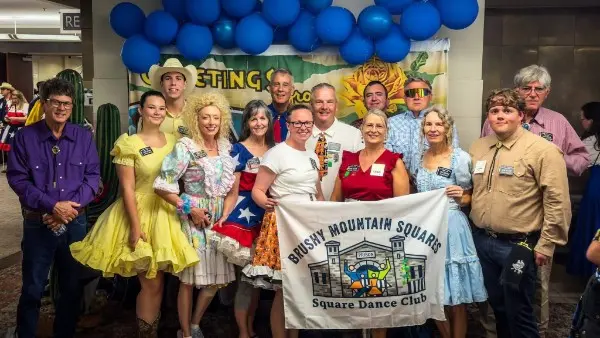
    Brushy Mountain Squares also captured our biggest group photo to date – one of those moments where you look around and realize just how many people are part of this shared joy. If a picture says a thousand words, this one practically shouts.

    Saturday night brought us to Eastman for the Partner’s Appreciation Dance with Travis Cook, and the good times didn’t slow down for a second. Before the dance even began, a few of us gathered for dinner at Southern Craft BBQ with Travis and Amanda Skidmore – great food, easy laughs, and the kind of conversation that makes you feel like you’ve known each other forever.

    Back at the dance, Travis kept the floor moving with his signature style, and we wrapped up the night with something a little wild—a round of hot hash with ten dancers instead of the usual eight. Chaotic? A little. Fun? Absolutely.

    To top it all off, our very own Deputy – celebrating a birthday – set up an “eye in the sky” and captured some incredible high-quality video of the night. It’s always nice to have memories, but it’s even better when you can relive them in motion.

    Two nights. Two fantastic callers. A whole lot of laughter, music, and connection. Weekends like this don’t just happen – you feel them. And this one? We’ll be talking about it for a long time.

  • Seventy Years & Still Promenadin’ — Outlaws Approved

    A few of Brushy Mountain Outlaws (The Transporter, Queen Pookie, Cool Man Luke, and Snowflake) made the trip to celebrate the Western Promenaders’ 70th Anniversary, and it was one for the books. The floor stayed lively all night with Jet and Sylvia Roberts keeping everything moving and the dancers right on cue.

    Good friends, great dancing, and a whole lot of fun packed into one night. Everyone left with smiles, tired feet, and memories worth the miles.

  • From Tennessee Hills to Ohio Halls: Dancing for a Friend

    Sometimes, square dancing takes you a little farther than the next county over.

    This past weekend, two of our own (Big Man & Babyface) from the Brushy Mountain Squares packed their bags, laced up their dancing shoes, slid their dancing socks over their toes and pointed themselves north toward Dayton, Ohio. The occasion wasn’t just another dance—it was something deeper, something that reminds us why this community means so much.

    They were headed to Jack Pladdys’ Appreciation Dance.

    Now, if you’ve been around square dancing long enough, you know names come and go across the microphone—but some voices stick with you. Not just for the calls, but for the kindness behind them. This dance was held to support Jack as he continues a hard fight—battling cancer that has metastasized to his jaw, and the ongoing medical care that comes with it.

    And that’s where the square dance world does what it does best.

    It shows up.

    No matter the miles, no matter the distance, dancers gather. Not just to swing and promenade, but to lift each other up in ways that go far beyond the floor. That’s exactly what our Brushy Mountain travelers did—carrying a little piece of Tennessee with them into that hall in Dayton.

    We like to think there’s a certain style to Brushy Mountain Squares. It’s not just in how we dance—it’s in how we care. It’s in the willingness to drive hours just to stand in a square with someone who needs support. It’s in the laughter shared between tips, the quiet understanding during a slow song, and the unspoken promise that none of us dance alone.

    Of course, not everyone could make the trip up to Dayton—but if you know Brushy Mountain Squares, you know that doesn’t mean they weren’t there in spirit. Back home in the hills, there were folks thinking about Jack and wishing they could be in that square. Around here, you don’t have to cross state lines to stand with someone—you just have to care. Whether they were dancing in Ohio or holding down the fort wherever we hail from, every one of us square dancers were a part of that circle, proving once again that square dancers show up… one way or another.

    From the hills of Tennessee to the heart of Ohio and around the world, that spirit traveled well.

    We’re proud of our dancers who made the trip. Proud to be part of a community that rallies when it matters. And proud to call folks like Jack Pladdys part of our extended square dance family.

    If you would like to support Jack Pladdys – visit http://www.jacksday.com to “Tip The Caller” or send a check to the address listed.

    Because at the end of the day, it’s not about perfect timing or fancy footwork.

    It’s about showing up… and keeping the circle (or square) unbroken.

  • Bob Osgood: The Man Who Helped Shape Modern Square Dancing

    When people think of square dance, they often picture energetic groups in colorful skirts and western shirts, but few know the name behind one of the most influential voices in the activity’s modern era — Bob Osgood.

    Bob’s journey in square dancing began long before most dancers knew there was a “square dance world.” As a college student in Southern California, he started calling dances and teaching steps. His passion for the activity grew even during World War II, when he organized and called dances for fellow servicemen — a role that sharpened both his skills and his belief in the power of community through dance.

    A Voice and a Magazine That Connected a Movement

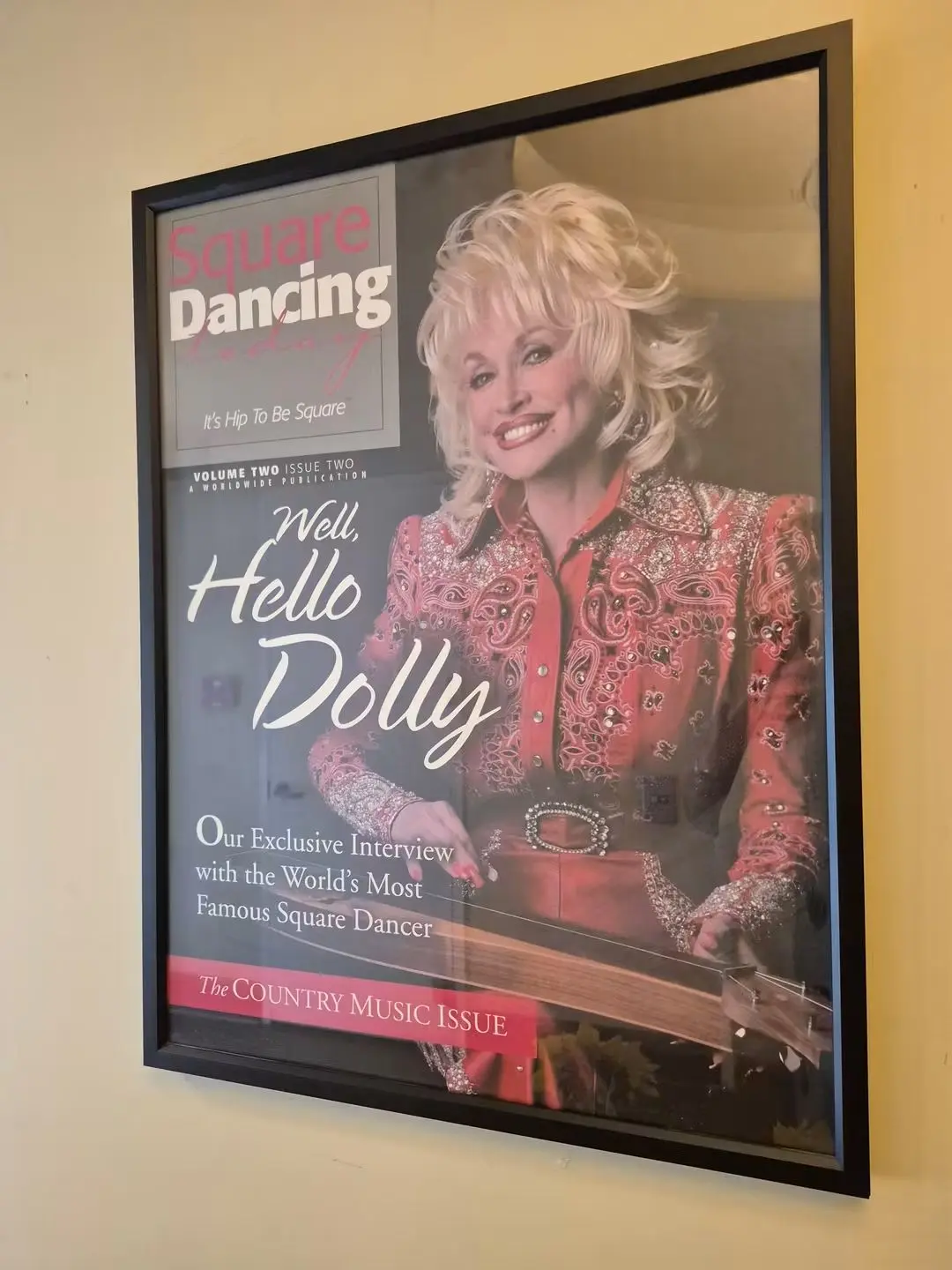
    After the war, Bob realized something important: square dancers and callers across the country were eager to share ideas, but there was no hub for conversation or connection. In 1948, he launched Sets in Order, a monthly magazine dedicated to square dance choreography, culture, news, and education. What began as a regional publication quickly became a national phenomenon — eventually running 444 issues over 37 years — and served as a central resource for dancers, teachers, and callers around North America and beyond.

    Through the pages of the magazine (retitled Square Dancing in later decades), Bob published dance calls, club news, teaching guides, and essays that helped standardize terminology and technique. His editorial leadership gave square dance its own shared language and community network at a time when the hobby was spreading but lacked cohesion.

    Beyond Print: Radio, TV, Tours, and Leadership

    Bob’s influence wasn’t limited to print. In the early 1950s, he produced and hosted square dance television programs, bringing instruction and joy into people’s homes at a time when TV was still young. He also helped organize workshops, caller schools, vacation dance institutes, and even international tours for square dancers — helping spread the activity to audiences as far away as Europe, Asia, and Hawaii.

    Perhaps one of his most lasting legacies was his role in the formation of CALLERLAB, the International Association of Square Dance Callers. In the late 1960s and early 1970s, as square dance terminology and expectations were becoming more complex, Bob helped convene callers and leaders to create standardized teaching programs still used today. He served as the organization’s first Executive Secretary and later Board Chairman, fostering collaboration across the community.

    Legacy and Importance

    Bob Osgood often said that square dancing was more than steps and calls — it was “friendship set to music.” That philosophy guided his work as a caller, publisher, organizer, and promoter. His vision connected dancers across cities, states, and even continents, giving square dance a structure, visibility, and vibrancy that ensured it would thrive long after his lifetime. For us today, Bob Osgood’s contributions are a reminder that preserving tradition while building community can keep culture alive — and that one passionate individual can shape an entire movement. His work continues to influence how we teach, dance, and celebrate square dancing, making him an enduring figure in our lives and in the history of this uniquely American art form.

    Though he passed away in 2003, Bob Osgood’s influence still echoes in dance halls, magazines, caller conventions, and the vibrant community he helped build. Whether you’re a seasoned caller or a newcomer learning your first do‑si‑do, his fingerprints are part of the joy you experience on the dance floor.

    Bob should be the reminder to callers that while calling steps is important, what really mattered was helping dancers connect with one another through the joy of the dance.